What High-Performing Schools Know About Community Engagement
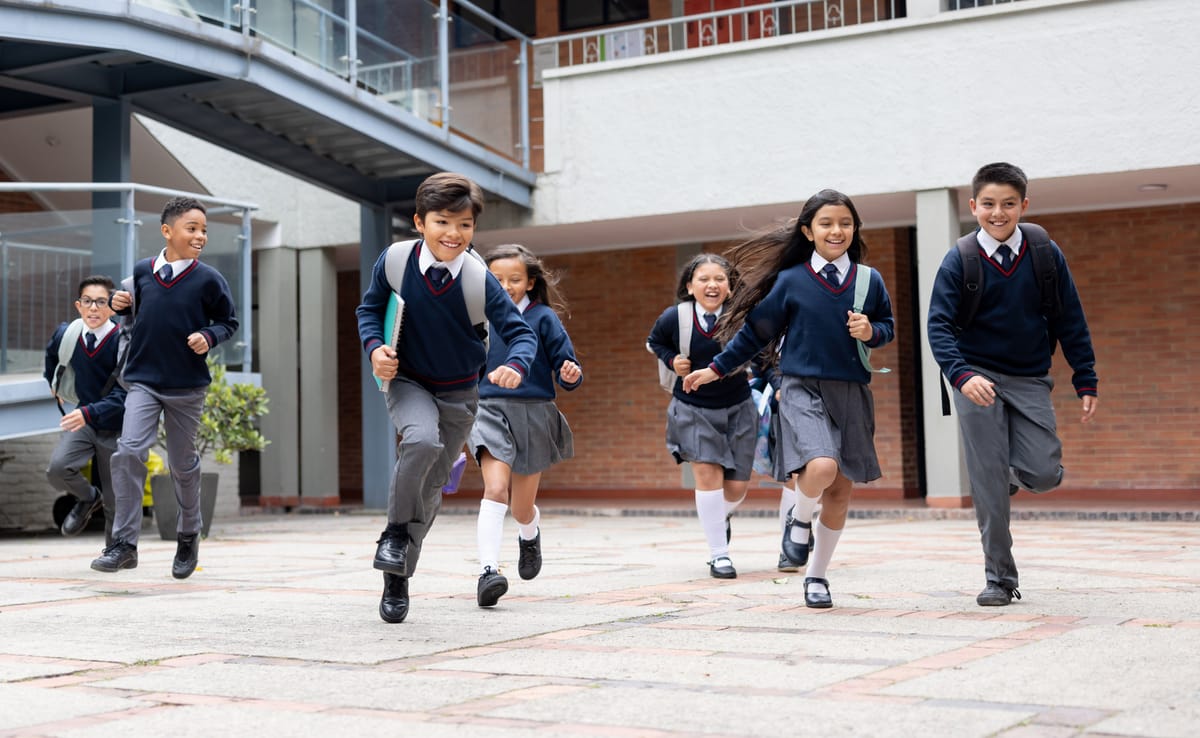
Every year, thousands of families choose a school based on something they can't quite articulate. It isn't the ATAR results: those are easy to find. It isn't the fee schedule or the facilities brochure. It's a feeling; a sense that this school actually understands and is passionate about its students, that families belong here, that the community is real and not just a word in the mission statement. And that feeling, more often than not, is built on moments and memories.
School community engagement has always mattered. What's changed is the stakes. In the competitive independent school market, families are actively comparing institutions, and the schools that feel alive, that generate warmth, pride, and connection, are winning enrolments that have nothing to do with academic league tables. The question isn't whether community matters. It's whether your school is building it deliberately, or leaving it to chance.

Community memory as infrastructure
The schools that consistently outperform their peers on parent engagement share a trait that isn't obvious until you look for it: they treat event photography as a system, not an afterthought.
Think about how schools use photography to build community, or how they should. Every school carnival, every production night, every interhouse swimming meet is a live moment of belonging. For a Year 7 student competing in their first cross-country race, it's significant. For the parent who couldn't get there, a photo arriving in their inbox that afternoon is no small thing. It's evidence that the school sees their child. That evidence travels. It gets shared in family group chats, posted on social media with the school tagged, passed between parents who are weighing up where to enrol the younger sibling.
The schools that have understood this treat it accordingly. They don't rely on a volunteer with a good camera and uncertain availability. They don't dump five hundred photos into a shared folder and hope parents find their child somewhere in the mix. They run school event photography as a repeatable, professionally managed process. and they do it consistently, across every event that matters to families.
The schools that haven't understood it yet are losing ground in ways they may not even be measuring. Not dramatically, not obviously. but slowly and persistently. Families who feel disconnected from school community don't complain loudly. They don't re-enrol siblings. They don't refer friends. They don't become the alumni who speak warmly about the school for the next three decades. The absence of good event memory infrastructure is an enrolment and retention leak that's invisible on a spreadsheet but very real in practice.
Word of mouth has always driven private school enrolment marketing. Real families talking to other real families about what a school actually feels like. And what they talk about isn't the curriculum map. It's the sports day where their daughter got her photo at the finish line. The school photo sharing that made a grandparent in another state feel like they were there. The school that remembered, every time, to make the family feel seen.

Safer, Smarter, Sorted: a framework for getting this right
When schools ask what a better approach to event photography looks like, the answer organises itself around three things that every school leader already cares about: safety, intelligence, and operational simplicity.
Safe means appropriate for a school environment: where student photo privacy is not an afterthought but a design principle. Parents trust schools with their children, and that trust extends to how images of students are captured, stored, and shared. Secure photo sharing for schools isn't a technical nicety; it's a duty of care. Any system that handles images of minors needs to be built around consent, access control, and appropriate use, not bolted on afterwards.
Smart means that technology does the work families currently have to do themselves. Searching through hundreds of school event photos for your own child is no one's idea of a good parent experience. AI photo matching for schools changes this entirely. Parents or students can find their photos quickly without trawling through large galleries, because the platform has already done the matching. The right photos get to the right families in beautiful, personalised galleries. That sounds simple, and it is. But very few schools are delivering it consistently.
Sorted means that the whole process is manageable for the school. It doesn't fall over when the regular photographer is unavailable. It doesn't require a communications manager to spend two days manually uploading and sorting images after every school play or sports carnival. It runs on a defined, repeatable process that the school controls: not a patchwork of email threads, WeTransfer links, and shared albums that families can't find six months later.
Together, these three principles describe what it actually looks like to treat school community engagement as infrastructure rather than improvisation.

Making it systematic
GeoSnapShot is the school photography platform built around these principles. Founded in Australia in 2013 and now operating globally, it was designed from the outset for events — sport, school life, community moments — where getting the right photo to the right person matters. For schools, that means branded galleries, smart photo matching that connects families with their students' images quickly, and a structured process built for institutions that take student privacy seriously.
The question worth asking, not at the end of the year, but now, is whether your school is treating community memory as infrastructure, or leaving it to chance. Because the families making enrolment decisions next year are already watching. Not only your open day presentation, but the moments they know you'll give them and their children to feel proud, connected, and seen.
Find out how GeoSnapShot works for schools here.